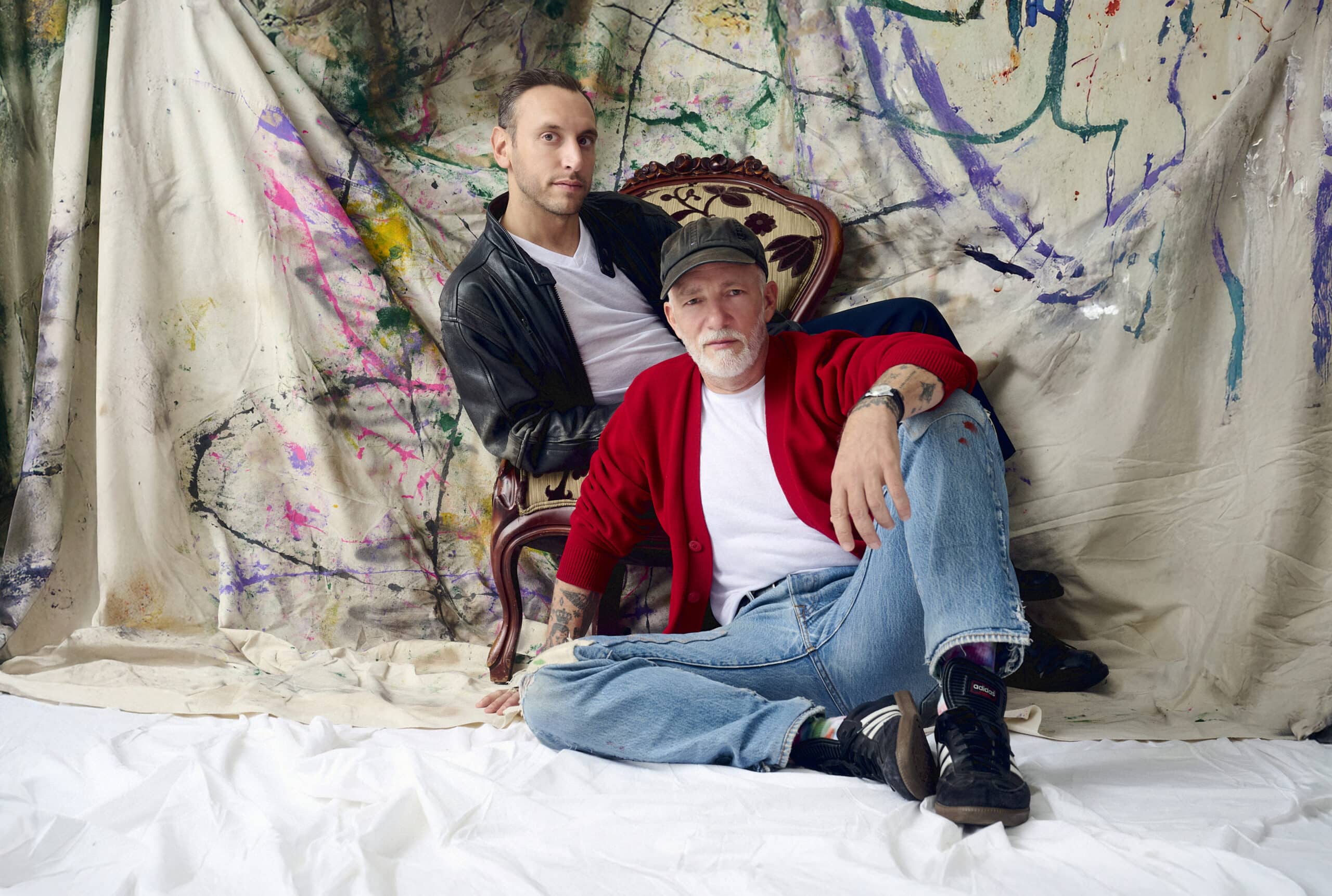
Into the ‘Wasteland’: Jason Haaf and Scooter LaForge Turn Queer Longing Into Art
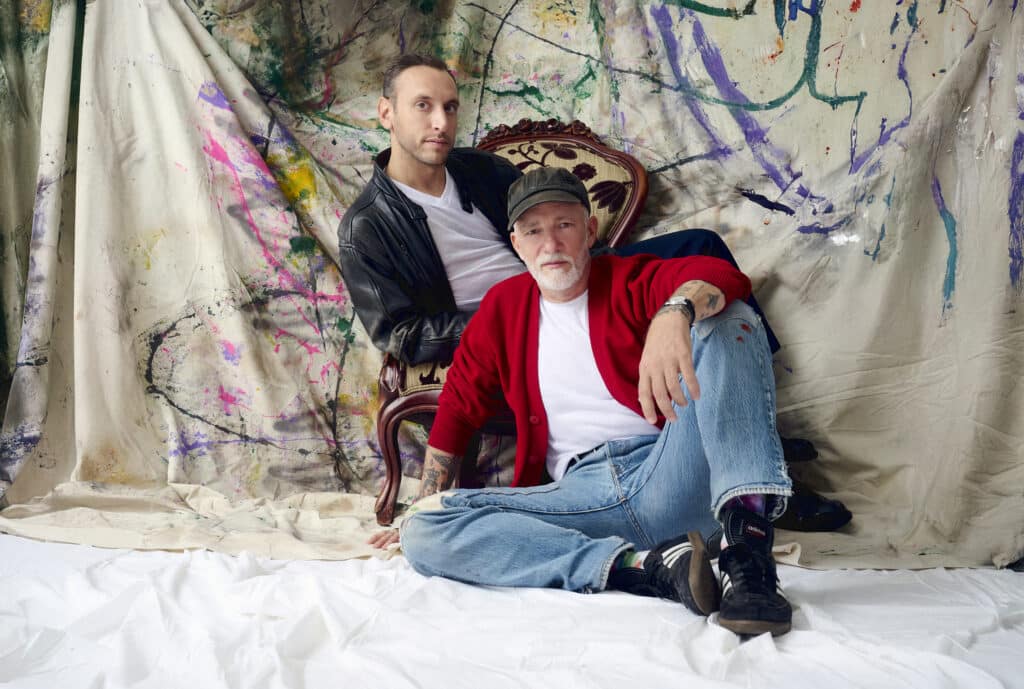
The new art novel from two downtown sensibilities blurs the line between collaboration, confession, and emotional survival.
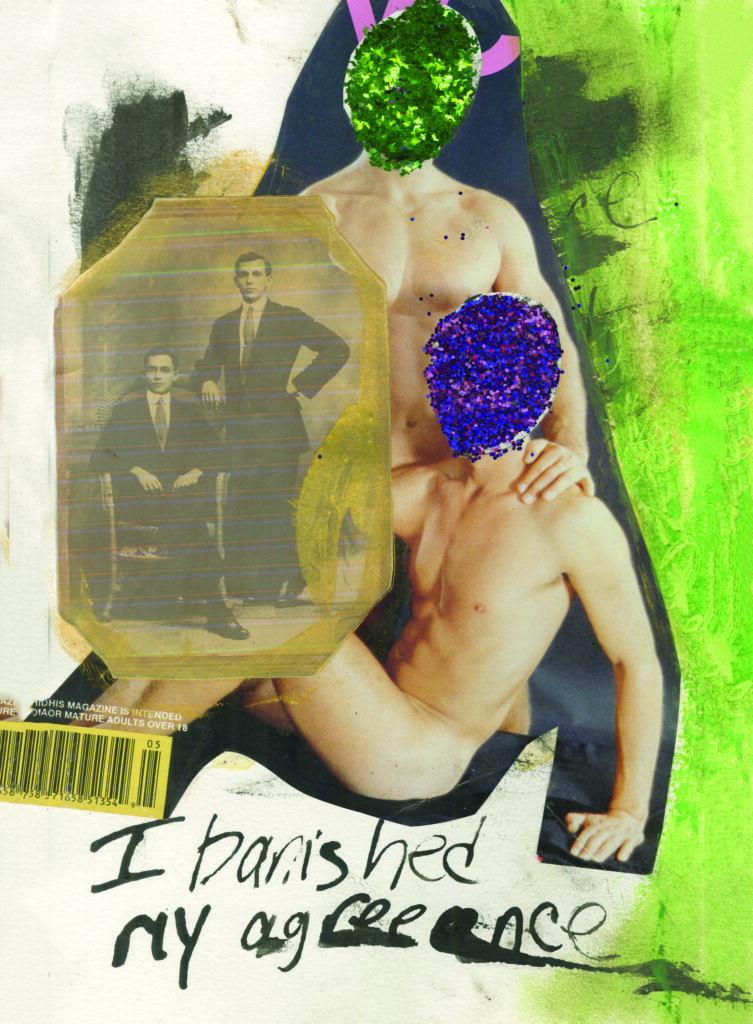
Some books tell a story. Others create a place you enter and may not leave unchanged. Wasteland, the new art novel by Brooklyn writer and visual artist Jason Haaf and East Village artist Scooter LaForge, belongs firmly in the latter category. Out now via Doable Guys, the project is less a conventional book than an immersive emotional landscape — one built from painting, prose, poetry, and collage, and charged with the kind of queer intimacy that feels at once deeply personal and broadly recognizable.
There’s lust in it. Repetition. Anger. Ache. The psychic residue of wanting more than the world seems prepared to give. In Wasteland, those feelings aren’t smoothed over or translated into something easier to digest. They’re left raw, tactile, and alive.
At its core, the book is the product of a genuine collision between two artists working without a rigid blueprint. The collaboration began, fittingly, at the Strand. Haaf was working there when he noticed the last copy of his 2022 debut novel, Harsh Cravings, had sold off the LGBTQ table. Soon after, he learned the buyer was LaForge — a downtown art-world fixture whose work has long moved between fine art, fashion, performance, and visual autobiography.
“I was flattered that Scooter, a fixture in the art and fashion world, thought to even purchase it,” Haaf says. “A few days and messages later, I got a bit of gumption and asked if he’d want to work together.”
What followed was not a calculated pairing, but a kind of instinctive recognition
Haaf, whose work often mines confession, memory, and diaristic intensity, approached LaForge with a desire for something deeper than a surface-level collaboration. He didn’t want text merely illustrated. Haaf wanted entanglement. He wanted the work to pass through another artist’s emotional and visual language and come back transformed. “I don’t want my work to just sit on top of another’s,” Haaf says. “I want it to go inside. I want a melding, a third eye, a true collaboration where lines are blurred.”
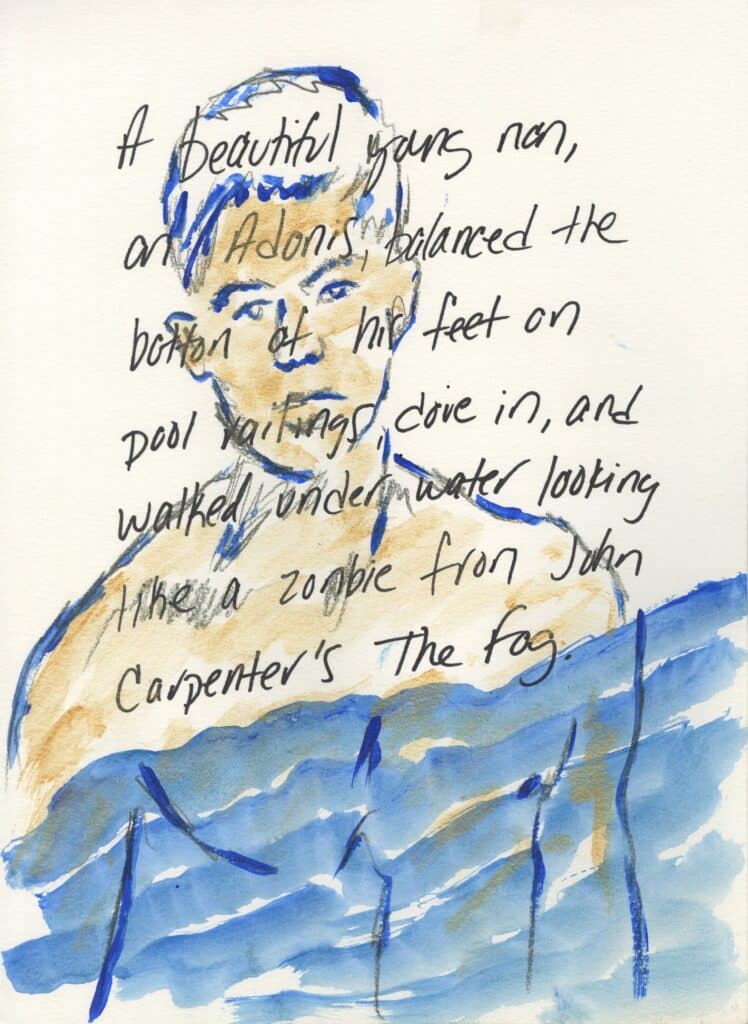
That ethos became the foundation of Wasteland. Using old journal entries dating back to 2021, Haaf began transcribing emotionally resonant passages onto watercolor paper with ink and bamboo pen, channeling not just the words themselves but the emotional states in which they were first written. He handed those pages to LaForge not with instructions, but with openness. The point was response, not control.
When LaForge returned the pages, surrounded by his art, the exchange became something bigger than either artist initially imagined. “It didn’t change the meaning of my words,” Haaf says. “Instead, it added a light and an energy to them, another pulse.”
That pulse is what gives Wasteland its charge
LaForge has described first encountering Haaf’s work as a moment of immediate recognition: picking up Harsh Cravings at the Strand, reading a few lines, and feeling something click. “I was roaming the Strand, hungry for something real — maybe a queer love story, maybe just a voice that felt alive,” he says. “Then I saw the cover of Jason’s book. It hit me. I opened it, read a few lines, and felt that electric pull you only get when something speaks straight to you.”
He reached out simply because the work moved him. “I didn’t know who he was, didn’t know his reputation — none of that mattered,” LaForge says. “I was responding to the object, the words, the feeling in my chest.”
Only afterward did the possibility of collaboration emerge. Their first meeting, by both accounts, carried an energy that was creatively and emotionally difficult to name — the kind of chemistry that can’t be manufactured and usually shouldn’t be overexplained. “We met in a café, and from the first conversation, something charged passed between us,” LaForge says. “Creative, emotional, hard to name.”
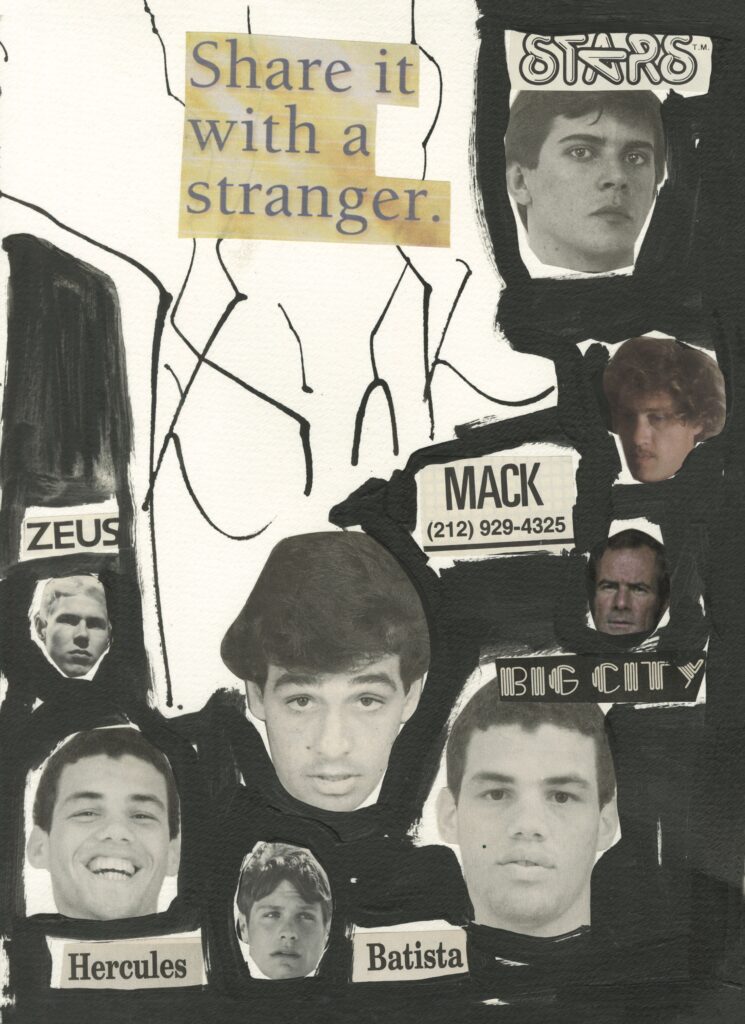
You can feel that in the finished work. Wasteland does not read like a neat exercise in multidisciplinary practice. It feels lived in and charged. Like two people meeting at the exact moment when each has something to unlock in the other. As LaForge puts it, “The work poured out of me. No forcing, no second-guessing. Just pure response. It felt like opening a vein in the best way.”
And while the book is undeniably queer in texture and sensibility, it is not limited by identity in any narrow sense. The title becomes its own psychological terrain: a place of longing, restlessness, frustration, reinvention. A place you go when your surroundings no longer feel sufficient. A place where desire curdles into obsession, or where collapse becomes the beginning of creation.
‘It is a place we all go to’
Months into the process, as Haaf began sorting through roughly 80 pieces, he realized Wasteland had become more than a title. “What I found is that Wasteland became a place, a being, a location,” he says. “While indefinitely queer in nature, it is a place we all go to.” That idea — of the wasteland not simply as ruin, but as a psychic holding zone between dissatisfaction and transformation — gives the work much of its emotional heft.
That’s part of what makes the project feel especially resonant now, in a moment when so much queer art is asked to explain itself, brand itself, or sand down its edges for public consumption. Wasteland refuses that impulse. Not interested in neatness, it invites viewers and readers into a shared psyche instead — messy, sensual, searching, unresolved.
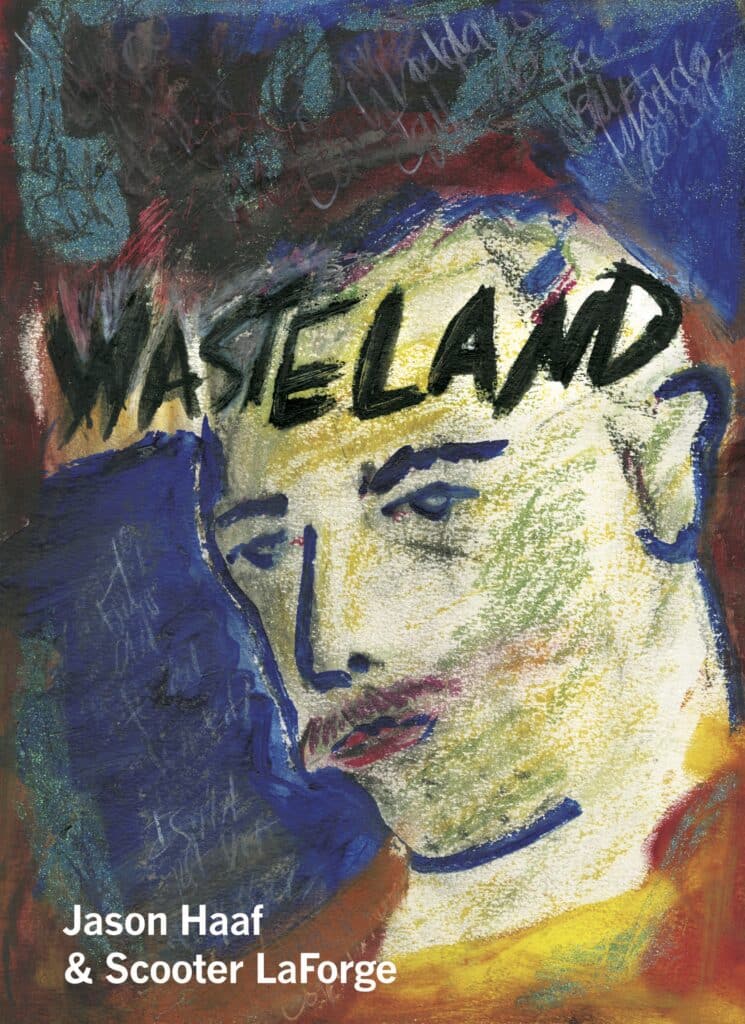
For LaForge, whose work has been exhibited everywhere from the Leslie-Lohman Museum in New York to the Friedrichshof Museum in Vienna and the Absolut Art Collection in Stockholm, the project marks a distinct new entry in a decades-long practice rooted in intuition, symbolism, and emotional immediacy. “This project is unlike anything I’ve ever done,” he says, “and I’m proud of what came out of us.”
For Haaf, Wasteland builds on an already compelling body of work that spans fiction, collage, and experimental publishing. His debut novel Harsh Cravings established him as a diaristic writer unafraid of intimacy, while later projects including Can I See Your Niche? and Watchword continued to push his interest in fragmentation, vulnerability, and visual-textual interplay.
Together, they’ve made something that feels less like a release and more like an encounter. Or, in LaForge’s words, “The book feels alive, touched by a real kind of magic — the kind that only shows up when two people meet at exactly the right moment and say yes.”
Wasteland is for anyone who has ever wanted to escape their surroundings, become undone by desire, or make meaning from emotional excess. It is about what happens when collaboration stops being decorative and becomes transformative. More than anything, it is a reminder that some of the most resonant queer art still comes from artists willing to let the lines blur — between disciplines, between selves, between wound and wonder.