Dr. Demetre Daskalakis on Leaving the CDC, Joining Callen-Lorde, and the Future of LGBTQ+ Healthcare
Dr. Demetre has never believed queer people should have to translate themselves to receive care.
Now, after leaving the CDC, he’s bringing that belief back home to Callen-Lorde.
By: Alexander Kacala
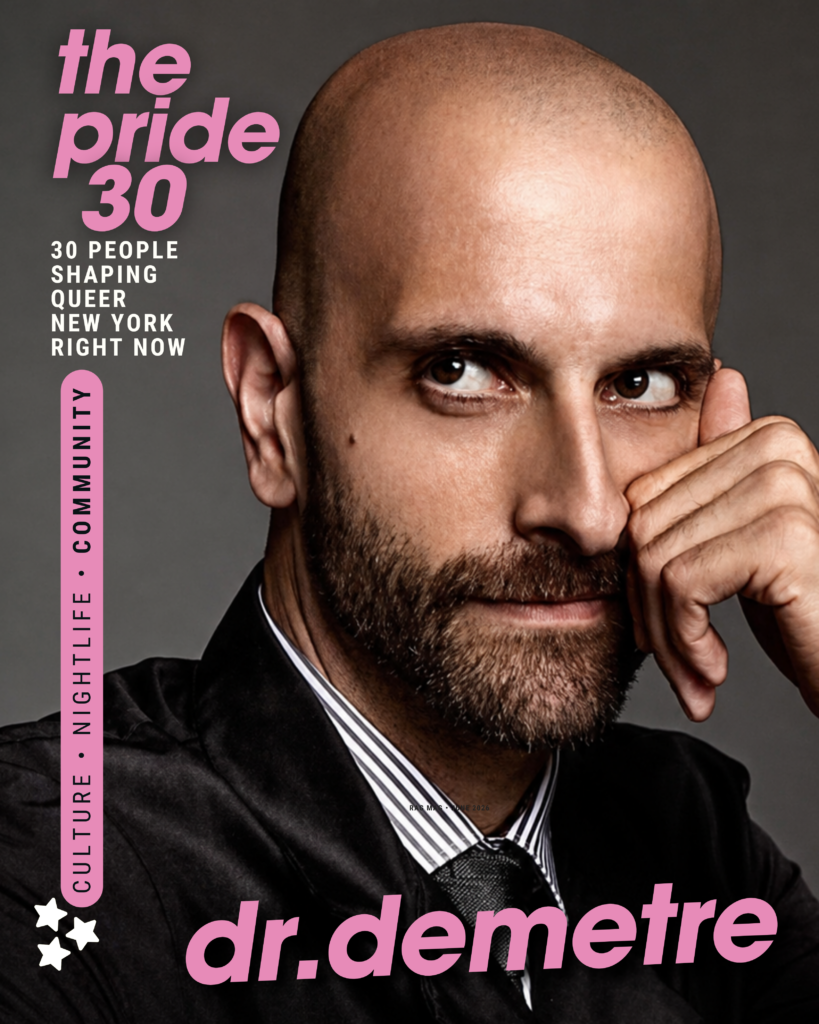
Dr. Demetre Daskalakis — lovingly referred to by many peers and patients as simply Dr. Demetre — has long been a beloved figure in queer communities from Atlanta to New York City and across the country.
But after stepping down from the CDC, he unexpectedly entered a much broader spotlight, bringing new attention to his advocacy, his public health work, and his tireless dedication to communities too often rendered invisible.
With an unapologetic comfort around queer sexuality, Dr. Demetre has also become a symbol of what it means to live openly at a time when LGBTQ+ bodies, pleasure, and self-expression are under renewed attack. Right-wing critics attempted to weaponize this part of his life against him, but for many, it only deepened their admiration. His visibility is not simply provocative for the sake of being provocative. It is rooted in a clear understanding of privilege, responsibility, and the power of showing up fully — especially for those who may not be able to express themselves as freely.
So when Callen-Lorde announced that Dr. Demetre would become its new Chief Medical Officer, the local queer community in New York rejoiced. It felt less like a hire than a homecoming: one of the country’s most visible queer public health leaders returning to the kind of community-centered care that has defined so much of his life’s work.
Where did this work begin for you?
It began personally.
I was a young gay man in New York during the AIDS crisis, and I saw what happens when a community is forced to care for itself because systems are not moving fast enough.
That experience shaped everything for me. Medicine became more than a profession. It became a responsibility — to protect people, reduce shame, and make care feel possible for those who had been ignored, judged, or left behind.
What has LGBTQ+ care taught you?
It taught me that trust is medicine. You can have the best science, the best treatments, and the best prevention tools in the world, but if people do not feel safe enough to tell the truth about their lives, that science will not reach them.
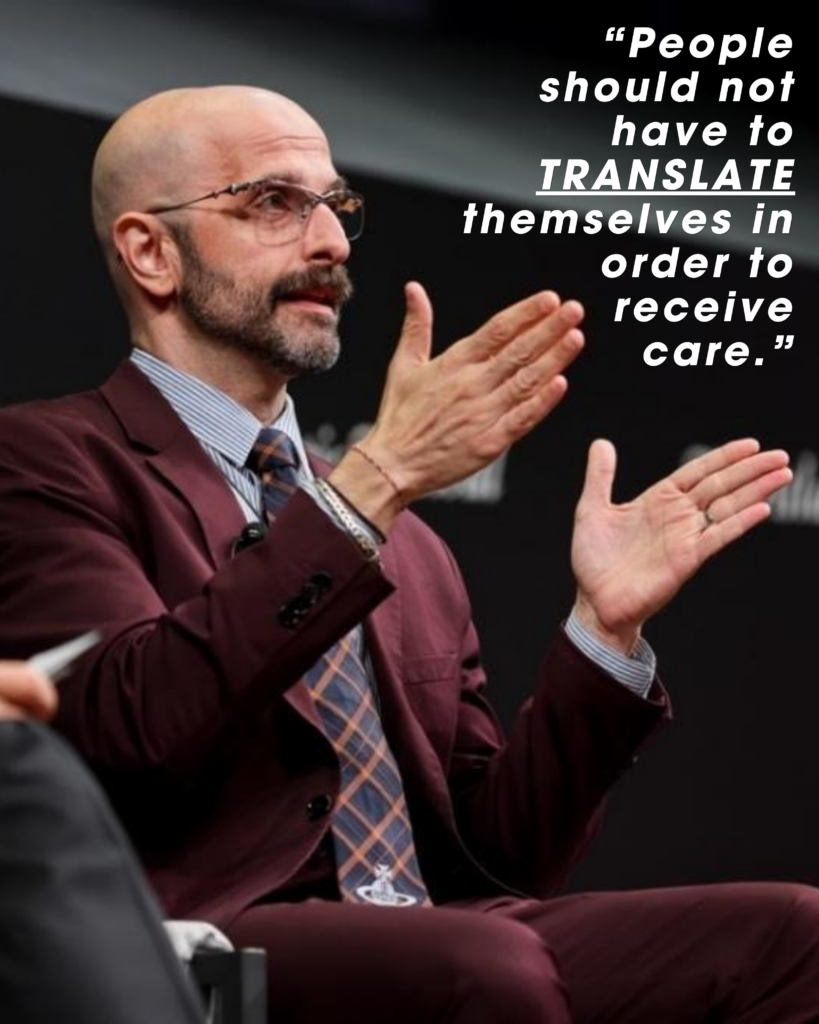
LGBTQ+ health care has to understand our bodies, our sex, our relationships, our fear, our humor, our grief, and our joy. People should not have to translate themselves in order to receive care.
You’ve managed to live very authentically online — sexually positive, open, and unfiltered — while also maintaining real professional authority. What has that balance been like for you?
I’ve gotten some excellent right-wing blowback, but I don’t need everyone to agree with me if I’m successfully communicating with the people I need to reach. I wake up feeling like I’m living authentically, and I don’t wake up thinking that either my sexuality or my professionalism is something I’m doing wrong.
That said, I also think it’s important to acknowledge privilege. As a white cisgender gay man, I’m allowed to live authentically in a way that other people are not always allowed to. A shirtless selfie may seem like nothing to me, but for someone with different intersections — a Black gay man, a trans woman, a person of color in leadership — that same visibility can carry much more risk. So yes, I’m lucky because I don’t care. But I’m also lucky because I live in a system where not caring doesn’t put the same kind of target on my back.
When you stepped down from the CDC, the moment became bigger than one resignation. What did you learn about yourself through it?
It wasn’t really the online response that stayed with me. It was what happened when we left. When things became untenable at the CDC, we had to decide whether our silence inside the institution was doing more harm than leaving. I had written a much longer resignation letter, and I had to choose whether to simply walk away or to leave and tell the truth. After a lot of conversations with mentors, I decided I wanted people to know what was going on.
I knew it was the right thing to do, but I was exhausted. I had no job. I had no insurance. I knew I would likely become a target again. And then we went to what they called the “clap-out.” I expected maybe 20 people. Instead, there were around a thousand people clapping.
That was the moment I realized this was bigger than me. I was doing something I learned in HIV work: when you have privilege, you use it to give voice to people who don’t have one. These public health workers knew what was happening, but many of them didn’t feel empowered to say it. Then we turned the corner and saw the uniformed public health corps saluting us.
That broke me. I realized we weren’t just giving voice to vulnerable communities. We were giving voice to scientists and public health experts, too.
It felt like the universe saying, “Yes, this matters.” Even if it didn’t change everything, shining a light on what was happening mattered.
You didn’t have a job lined up when you left the CDC. How did that experience shape what came next for you?
Honestly? I needed health insurance!
As doctors, we usually move from one job to the next like a baton handoff. You have coverage. You have a plan. But this wasn’t a normal career move. It was a scientific and political statement, and I left without a job. I had about two weeks of insurance left, and then I was looking at coverage that cost thousands of dollars a month. I ended up getting catastrophic insurance and crossing my fingers nothing bad happened.
That changed me. I had taken care of so many patients who had lived that reality, but I had never truly experienced it myself. Now I can speak much more candidly about how inadequate our healthcare system is.
Health should not be treated like a commodity. No one should have to decide between the economic harm of paying for care and the personal harm of going without it.
What led you to Callen-Lorde?
Callen-Lorde made sense immediately. I had worked there as a medical student, and during my time at the health department, I was often in contact with them because they were always doing essential work.
The opportunity to be chief medical officer at an organization like that, and to help innovate from the frontlines, felt exactly right.
Right now, I don’t think the most useful place for me is inside government. Government is in shock and awe. The changes that need to happen are going to have to come from the ground up. I needed to be in the middle of the chaos, and Callen-Lorde is a beautiful place to land in the middle of medical chaos.
What has the queer community taught public health that the rest of the world still needs to learn?
Community first. The queer community has a long history of saying, “You cannot just talk at us and expect us to do what you want. We have to be part of the process.” When healthcare and public health are created with the community, things go better. We saw that with mpox. When that doesn’t happen, things go badly, like in the early days of HIV.
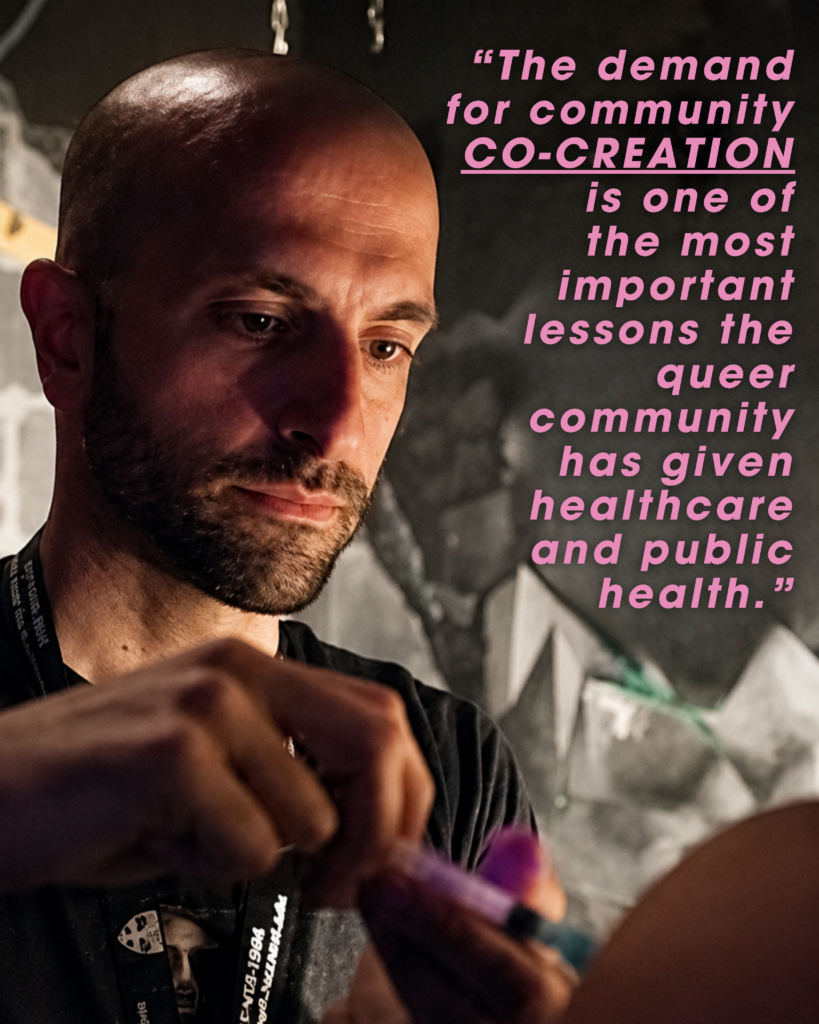
The demand for community co-creation is one of the most important lessons the queer community has given healthcare and public health.
How has New York shaped your understanding of care, risk, survival, and community?
All of it. I landed in New York in 1991, during the worst years of HIV, and that shaped everything about how I understood what a city can do — and what challenges a city can create — around health and community.
New York is also a microcosm of the world. From a public health perspective, the boroughs teach you very quickly that one size never fits all. What works in Chelsea does not necessarily work in the Bronx. You need a big vision, but you have to build it from the frontlines up.
I also always say, and the right wing hates this so I’ll keep saying it, that I learned my bedside manner from nightlife people and drag queens in the East Village. Being in those rooms taught me how to talk to every kind of person and treat them like a human being. That is what bedside manner really is: making someone feel like you are listening.
At a time when LGBTQ rights, especially trans rights, are being attacked nationally, what role should local healthcare and public health systems play in protecting our communities?
Public health has a very specific role right now, especially locally. New York City is a great example of what it can look like when local systems defend their communities against attacks coming from the federal government.
At the healthcare level, the best resistance is providing the highest quality care. Systems need to create affirming environments, and individual providers need to listen, understand the trauma people are carrying, and deliver evidence-based care in a trauma-informed way.
Professional organizations matter, too. Groups like the Infectious Diseases Society of America and the American Academy of Pediatrics are fighting these battles at a national level. They are street fighters for us, and we need to support them if we can.
And of course, Pride can be celebration, protest, marketing, memory, and survival all at once. In 2026, what does “Pride” mean to you at this point in your life?
Pride has evolved for me over the last two years. I wasn’t around for Stonewall, and I wasn’t around for the darkest days of HIV in the way earlier generations were. For much of my life, I experienced queer community during a time when things were mostly getting better, even if they were never perfect.
Now Pride means even more.
It feels less like a celebration alone and more like a reminder of what community is for. It is about visibility, resistance, protection, and understanding that the freedoms some of us have are not equally shared by everyone in our community.
To follow Dr. Demetre Dasklaskis on Instagram, head here.
Throughout Pride Month, RAG MAG NYC is spotlighting 30 queer New Yorkers shaping culture, community and nightlife right now.
These are the people creating the spaces, conversations, organizations, performances, and moments that make LGBTQ+ New York what it is. Some are household names. Others are the quiet forces making an impact every day.
Because Pride has always been more than a celebration. It’s the people who show up for one another.