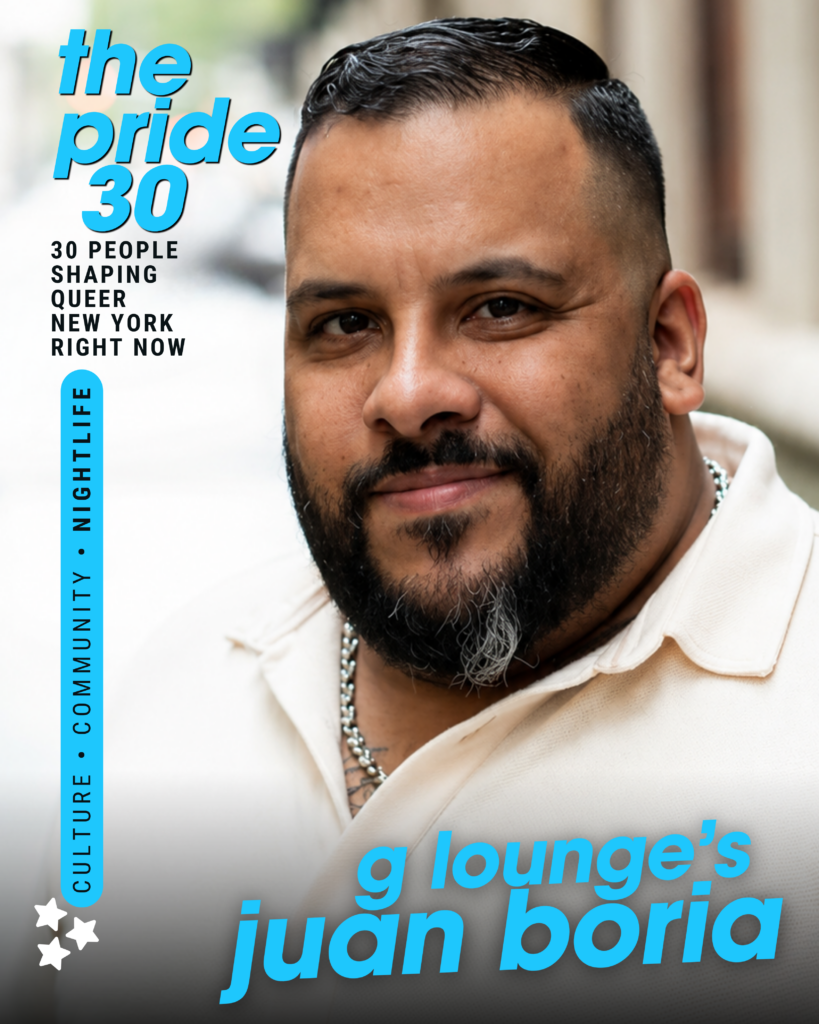
Juan Boria Brings the Glow Back to G Lounge
After years of reinvention, the beloved Chelsea bar is embracing its original spirit again —
with Juan Boria restoring the warmth, sound, and soul that made G Lounge feel like home.
By: Alexander Kacala
G Lounge has had more farewell tours than Cher. Well, maybe not quite that many.
But when the beloved Chelsea bar closed in 2017 and rebranded as the hyper-masculine REBAR, the community mourned more than just a nightlife venue. They mourned the oval bar, the neon walls, the warmth, and the rare kind of gay space that felt bright, open,and alive.
When it first opened in 1996, Michael McGrail teamed up with four partners to create something different on W. 19th Street. At a time when many gay bars were still dark, secretive, and cavernous, “g” was modern, airy, and welcoming, with light wood panels, cozy seating, daily DJs, and a grand archway left over from the building’s horse-stable past. It quickly became one of Chelsea’s defining safe spaces: a cocktail lounge where community could actually flourish in the light.
After 20 years, as nightlife shifted toward Hell’s Kitchen, the original g closed. REBAR followed, bringing a colder, more industrial feel to the space. But in 2024, McGrail’s husband took over with Juan Boria, whose nightlife instincts helped guide the room’s return to form. Boria redesigned the space, bringing back the warmth, light, soul, and sound that had once defined it.
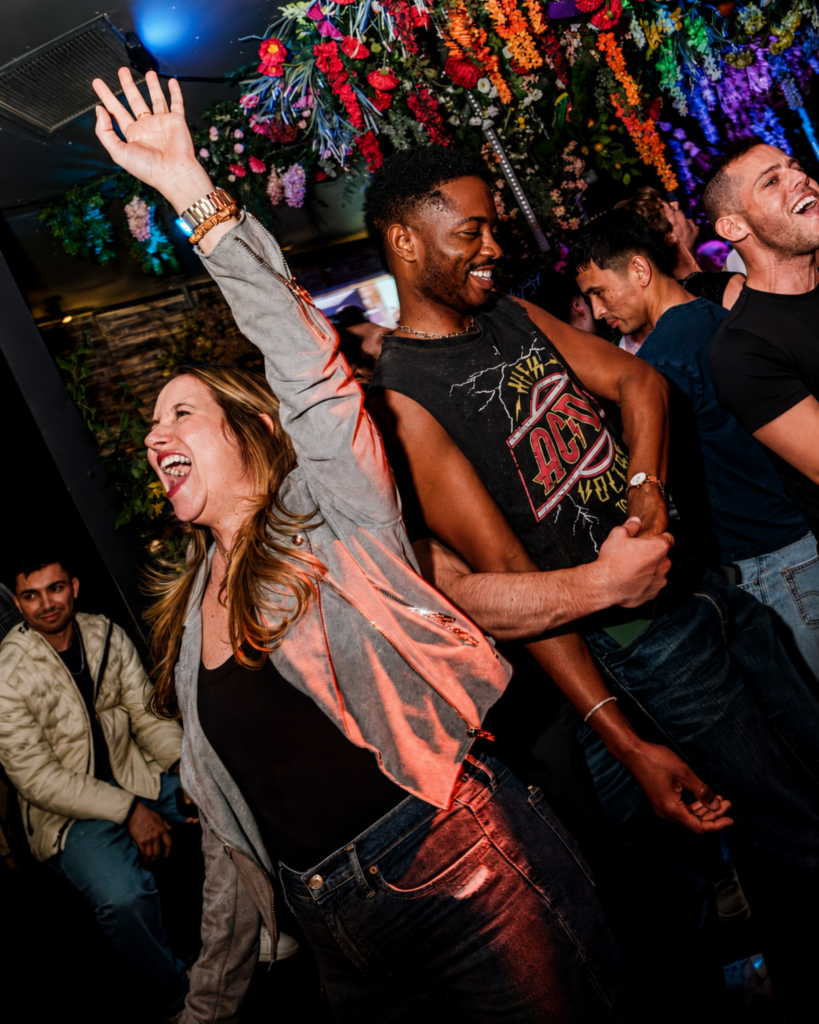
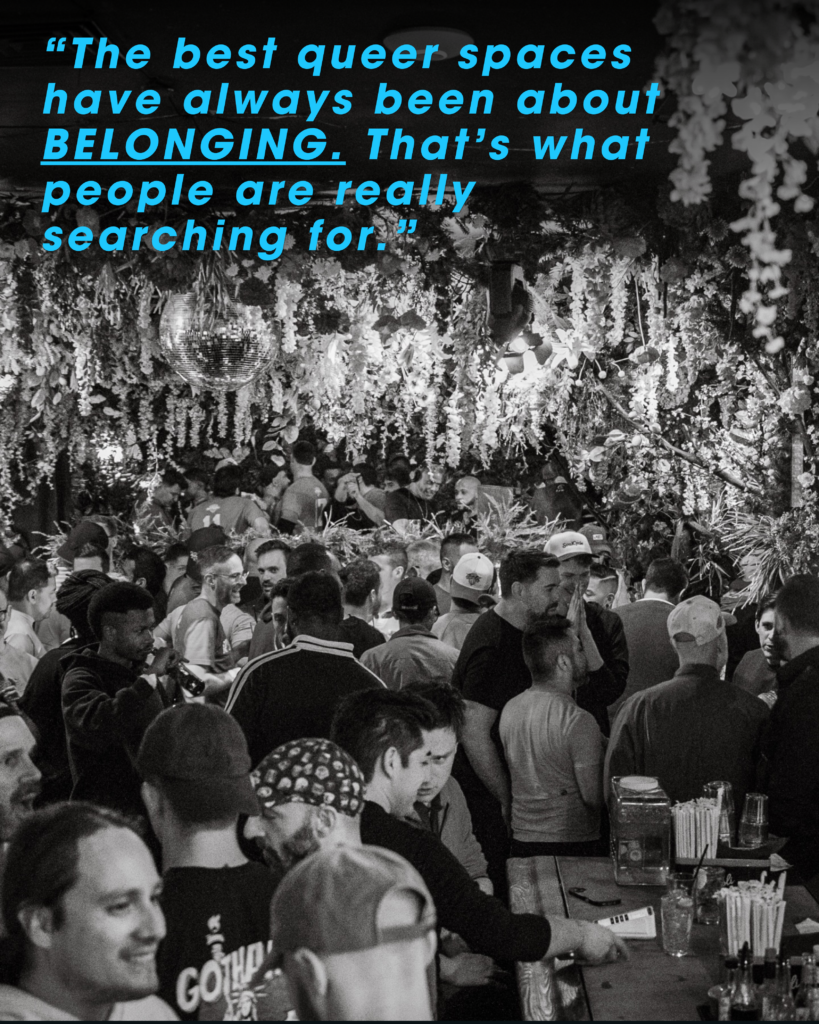
But the new G Lounge is not just another reboot, or a nostalgia play dressed up in better lighting. It has become a true community hub, with events that range from its wildly popular Drink & Draw — bringing guests up close and personal with some of the city’s hottest trade — to “Drag Race” watch parties, dance-floor swirls like IntraMaroon, and the kind of after-work martini ritual every neighborhood needs. It is a tribute to the past, reimagined for
G Lounge has become more than just a bar for so many. What do you think people are really coming there to find?
JUAN BORIA: People come to G Lounge looking for connection. New York can be exciting, but it can also be deeply isolating, especially for queer people. Some people walk in after a long workday, a bad date, a breakup, or a celebration. Others just don’t want to feel alone. The music and cocktails may bring them in, but what keeps them coming back is the feeling of being recognized — that someone remembers their name, their drink, their story. The best queer spaces have always been about BELONGING. That’s what people are really searching for.
What was the original vision for G Lounge, and how has that vision changed since opening?
The original vision was to create a nightlife space that felt elevated but still approachable. I didn’t want anything overly exclusive or performative. I wanted a place where someone could come in for one martini after work and end up staying for hours because the energy pulled them in.
Since opening, the vision has become much more community-driven. The guests shaped it. We realized quickly that people were craving a neighborhood queer lounge again — somewhere social, warm, a little chaotic in the best way, but still intentional. It became less about running a bar and more about building a space people could emotionally attach themselves to.
Queer nightlife in New York has gone through so many eras. Where do you see G Lounge fitting into that larger history?
Queer nightlife in New York has always adapted in order to survive. Every generation has had its spaces — underground bars, discos, leather clubs, drag bars, activist spaces, and dance floors born out of necessity.
G Lounge fits into this newer era where queer nightlife is rediscovering intimacy. For a while, everything became hyper-commercial, hyper-ticketed, and hyper-VIP. I think people are tired of that. G Lounge sits somewhere between old-school neighborhood gay bar culture and modern queer nightlife. We have drag shows, DJs, and parties, but we also have regulars sitting at the same stools every week having conversations that matter.
That balance feels important.
What does it take to keep a queer nightlife space alive in New York right now?
It takes more than people realize. Financially, New York is brutal. Rent, staffing, insurance, liquor costs — everything keeps rising. But the emotional part is just as hard. When you run a queer space, people don’t treat it like just a business. They attach memories, expectations, and emotions to it.
You become bartender, therapist, event producer, crisis manager. Creatively, you have to keep evolving without losing your identity. You can’t just chase trends. The spaces that survive make people feel something real while still adapting to how queer culture changes.
What makes a good gay bar in 2026? Is it the music, the crowd, the staff, the energy — or something harder to define?
A good gay bar in 2026 is about energy and intention. The music matters. The staff matters. The crowd matters. But what really defines a great queer space is whether people feel safe enough to be themselves there.
You can walk into a beautiful venue with great DJs and still feel uncomfortable because the energy is off. Meanwhile, a tiny dive bar with imperfect lighting can feel magical because the people create warmth. Guests can sense authenticity immediately. People want spaces that feel alive, not manufactured.
How important is it to you that the bar feels like a local gathering place, not just a nightlife destination?
That neighborhood feeling is incredibly important. I never wanted G Lounge to feel disposable — like a place you go once for Instagram and never return to. I wanted it to feel familiar.
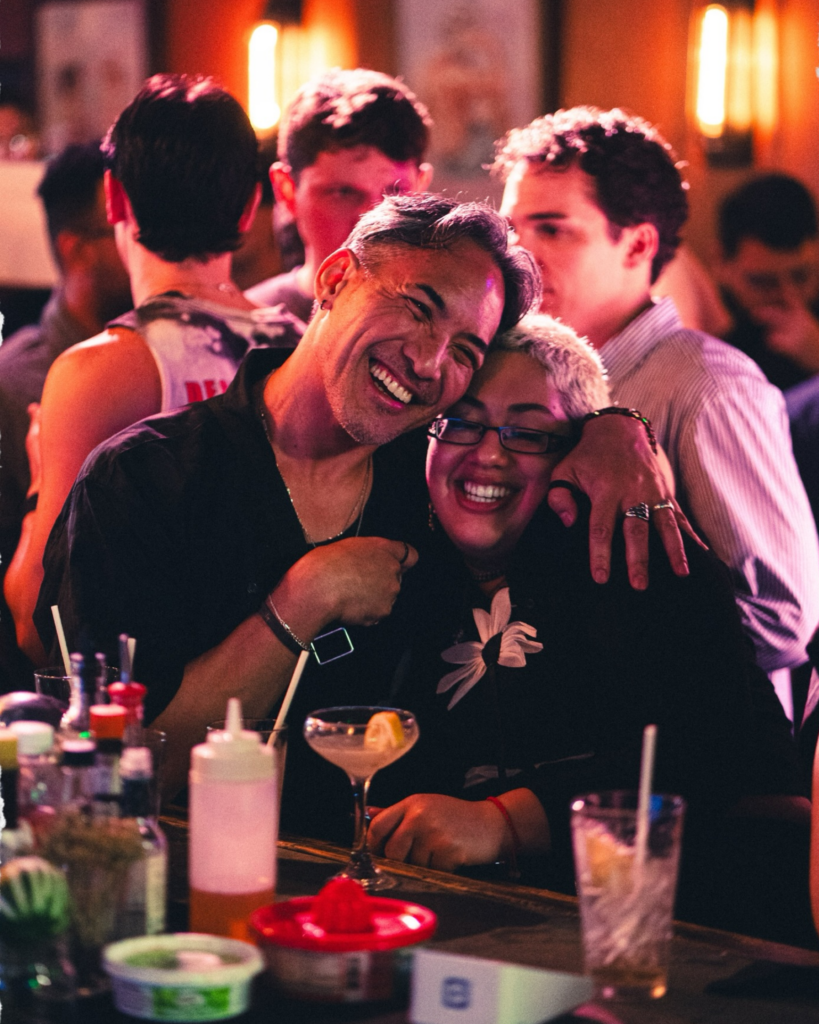
I love when bartenders know people’s names, when neighbors stop in during the week, and when different generations of queer people end up sitting next to each other at the bar. That local feeling creates stability and trust. In queer nightlife, those gathering places matter because they become part of people’s routines and emotional lives.
What have you learned from the regulars — the people who keep coming back?
The regulars have taught me that consistency matters more than perfection. People don’t expect every night to be flawless. They want honesty, effort, and a sense that the space genuinely cares about them.
Queer spaces become part of people’s personal histories in ways owners sometimes underestimate. Someone may meet their partner there, celebrate sobriety there, recover from heartbreak there, or simply survive a lonely year because they had somewhere to go every week. Hearing those stories changes how you view the work.
And of course, the time-honored question: Pride can be celebration, protest, marketing, memory, and survival all at once. In 2026, what does Pride mean to you?
Pride in 2026 feels layered. It’s celebration, but it’s also memory and responsibility. Pride can become overly commercialized, but underneath all of that, there is still something deeply emotional about queer people gathering publicly and unapologetically.
To follow Juan Boria on Instagram, head here. To follow G Lounge on Instagram, head here.
Throughout Pride Month, RAG MAG NYC is spotlighting 30 queer New Yorkers shaping culture, community and nightlife right now.
These are the people creating the spaces, conversations, organizations, performances, and moments that make LGBTQ+ New York what it is. Some are household names. Others are the quiet forces making an impact every day.
Because Pride has always been more than a celebration. It’s the people who show up for one another.