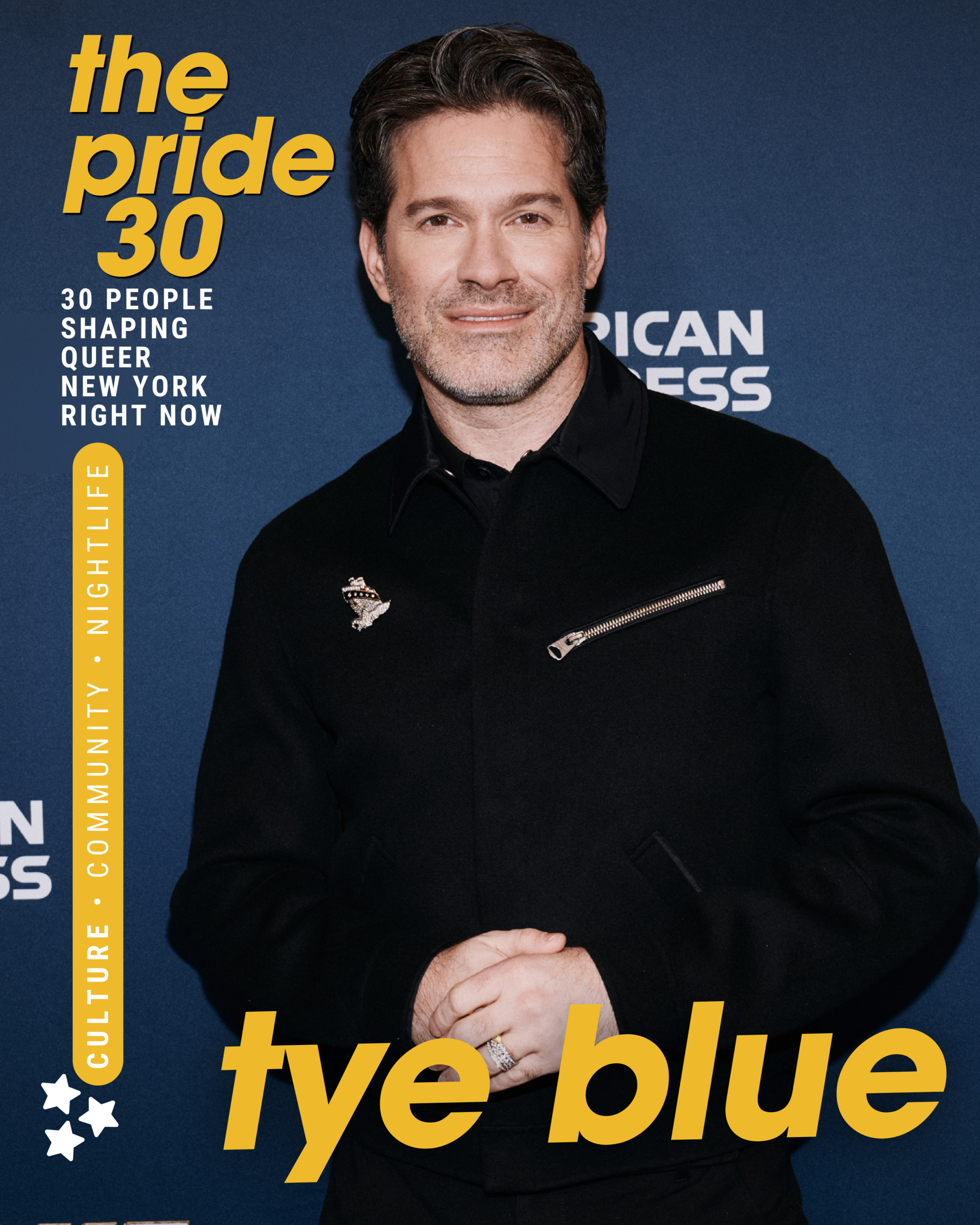
How Tye Blue Turned ‘Titaníque’ Into a
Queer Theatrical Phenomenon
The co-author and director of the Tony-nominated Titaníque turned a Céline Dion fever dream into a celebration of queer craft, chaos, and theatrical bliss.
By: Alexander Kacala
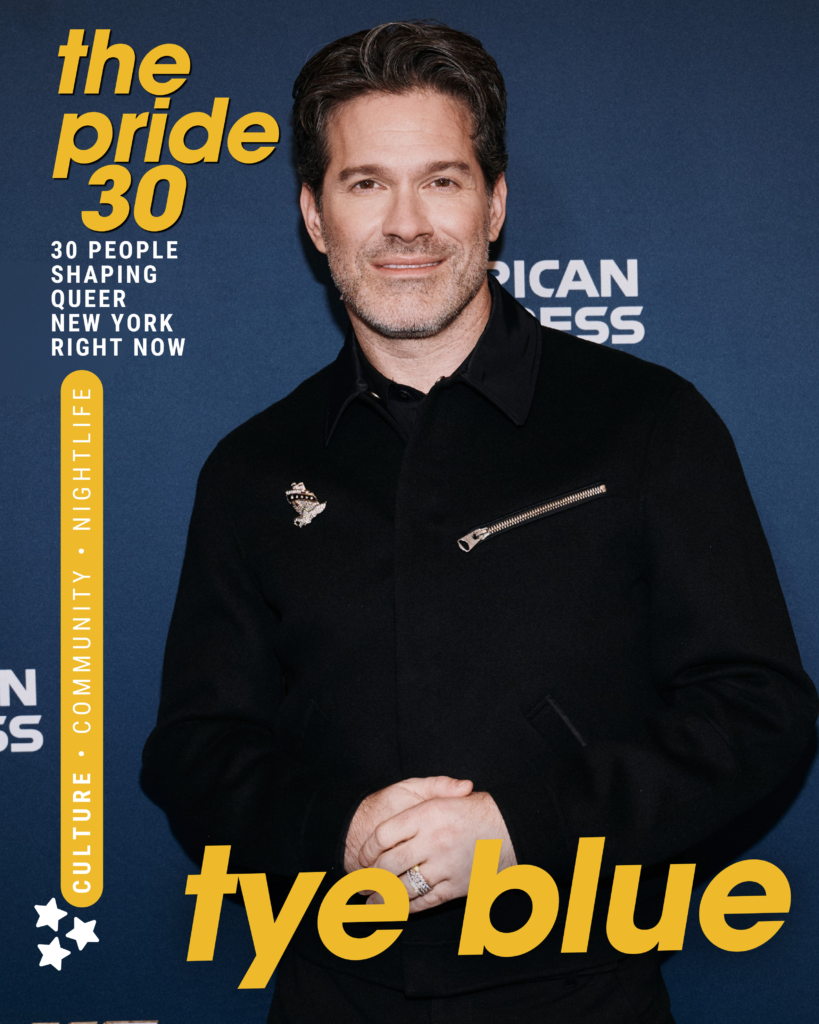
Tye Blue knows that camp is not the opposite of craft — it is craft turned all the way up.
As the co-author and director of Titaníque, Tye Blue helped turn what could have been a deliciously deranged inside joke into one of the most joyful, unhinged, and genuinely brilliant theatrical sensations of the decade. A Céline Dion-powered retelling of Titanic sounds, on paper, like something whispered at 4 a.m. by gays with perfect taste and no adult supervision. In Blue’s hands, it became art: precise, ridiculous, emotionally generous, and somehow both deeply stupid and deeply smart.
But that is the magic of Blue. Before Titaníque, he had already sharpened his instincts inside the machinery of modern queer pop culture, working on shows like RuPaul’s Drag Race and Project Runway, where spectacle, wit, fashion, and feeling all collide. With Titaníque, he didn’t just direct a hit musical — he helped prove that camp belongs on the biggest stages, not as a novelty, but as a language of survival, community, and pure theatrical bliss.
We celebrate Blue: a director, writer, producer, and architect of queer chaos who reminds us that sometimes the most profound thing you can do is make a room full of people absolutely lose their minds with joy.
When did you first realize Titanique had the potential to become something much bigger? Was there a first “aha” moment?
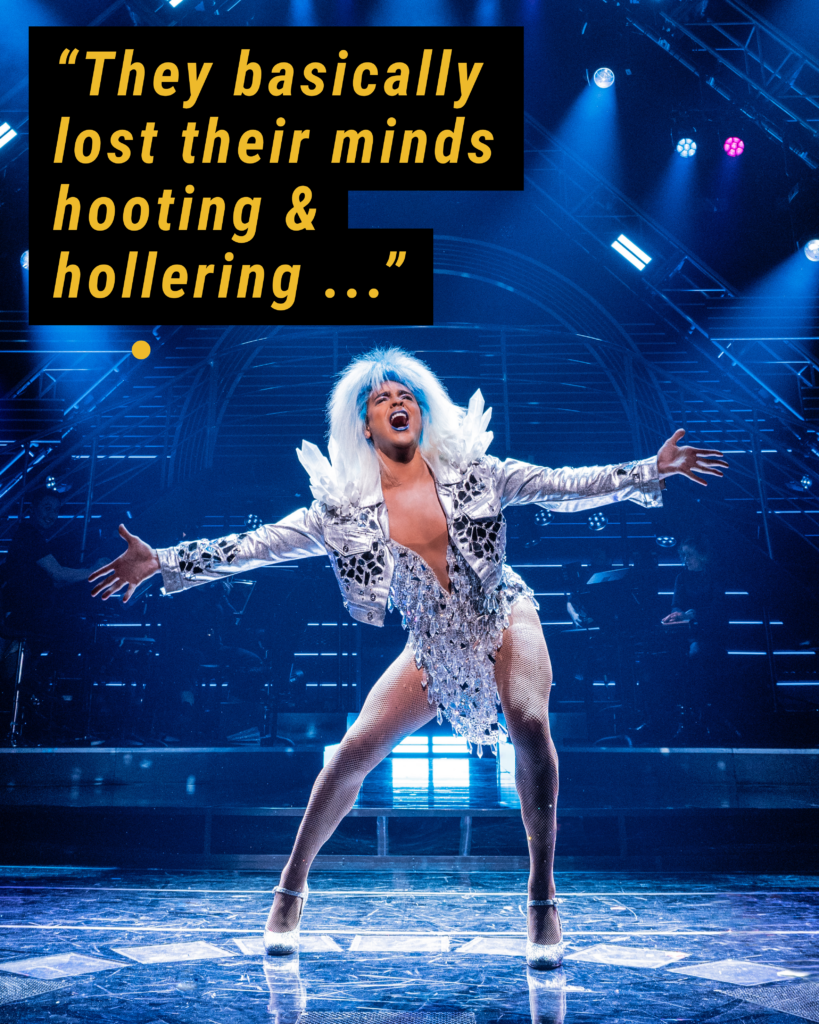
There have been many “aha” moments along the way, but the first one had to be our very first invited read through in LA. It was just our first draft, and friends and industry people were crammed into a tiny, hot studio I rented. They basically lost their minds hooting and hollering, culminating in a standing ovation. Immediately following the read through, the programmer from the Wallis-Annenberg in Beverly Hills walked over and offered me a slot to premiere it there a few months later. That set us on a real trajectory.}
The show walks such a specific line between parody, musical theater, pop concert, and queer fever dream. How do you keep that balance from tipping too far in any one direction?
Oh it’s a struggle, and the balance is not always there. When I’m staging a new production, I try to be very clear about tone, line by line: “This beat should feel like the movie” or “This wants to be very contemporary and authentically you on this beat.”
Actors tend to get excited (and dare I say, bored) in long runs, and things start slowly shifting over time, so maintenance becomes very important. When I come back after a while and watch the show, the bulk of my notes are usually things like: slow down, speak like a normal human being, stop yelling, you’re hitting that punch line too hard, stop mugging so hard, be still, don’t be greedy, etc. Those sound so crazy to type out, but it’s honestly the truth.
What was it about Céline Dion, as both an artist and a cultural figure, that made her the perfect subject for this?
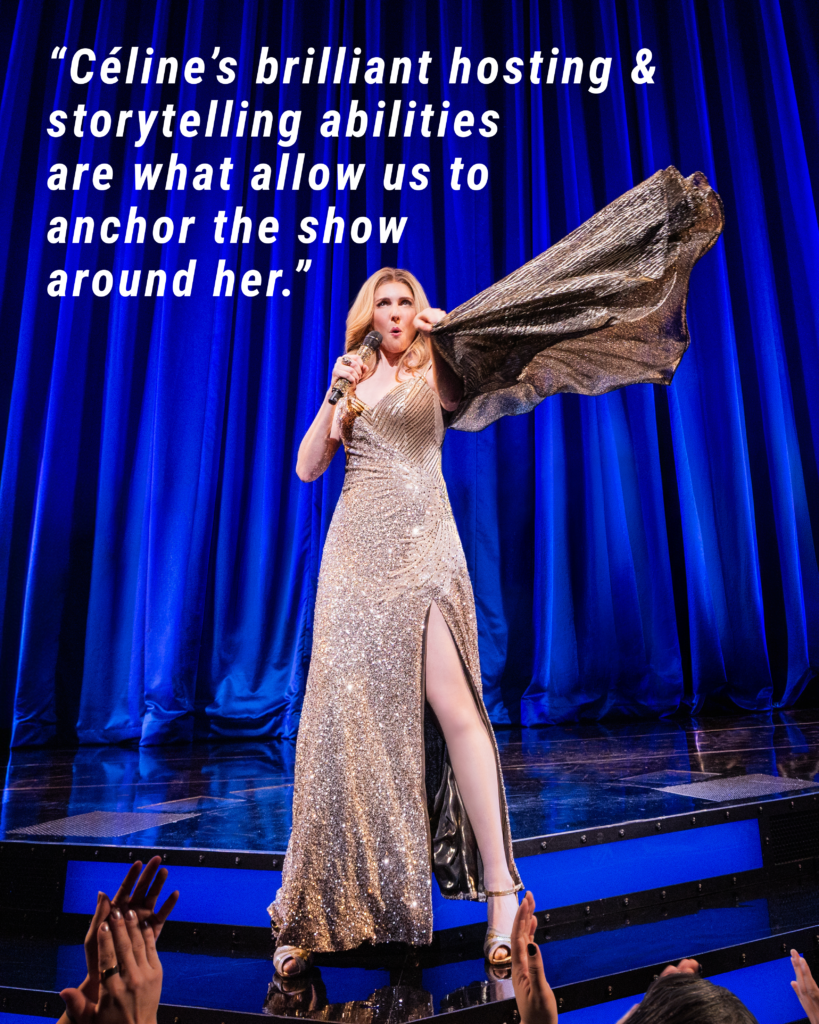
Her brilliant hosting and storytelling abilities are what allow us to anchor the show around her. Also, she tells a story in some of her earlier concerts that I found particularly intriguing when we started working on this: she never wanted to sing “My Heart Will Go On.” She hated it and told Rene she wouldn’t record it, but he had already contractually committed her to at least recording the scratch vocal.
She fulfilled her obligation and was then stuck with this song… this megahit… that she hated but that propelled her to global icon/legend. And I just found that paradox so juicy as a motivator for telling a kooky story.
What was the biggest change or challenge in bringing the show from Off-Broadway to Broadway?
Casting. Landing a company that would convince theatre owners to take us in, but that could also do the job. Then of course, creating a new set and lighting design in less than 6 weeks, all with a very small budget compared to the other musicals this season. Scaling props and costumes and musical numbers was always on my mind as well, of course.
She fulfilled her obligation and was then stuck with this song… this megahit… that she hated but that propelled her to global icon/legend. And I just found that paradox so juicy as a motivator for telling a kooky story.
The show has become a real word-of-mouth hit in New York. What do you think audiences are responding to most?
We don’t realize how much stress and trauma we carry with us every day. Political, social, economical, financial stressors… especially for the last decade or so. Trump. Covid. Cost of living. Family tensions. What we are offering people is a guaranteed escape from all of that for about two hours that is deeply rooted in a story and a vocabulary that they relate nostalgically to a simpler, happier time in their lives. But we do it through a really fun queer lens, which ups the ante on the fun factor.
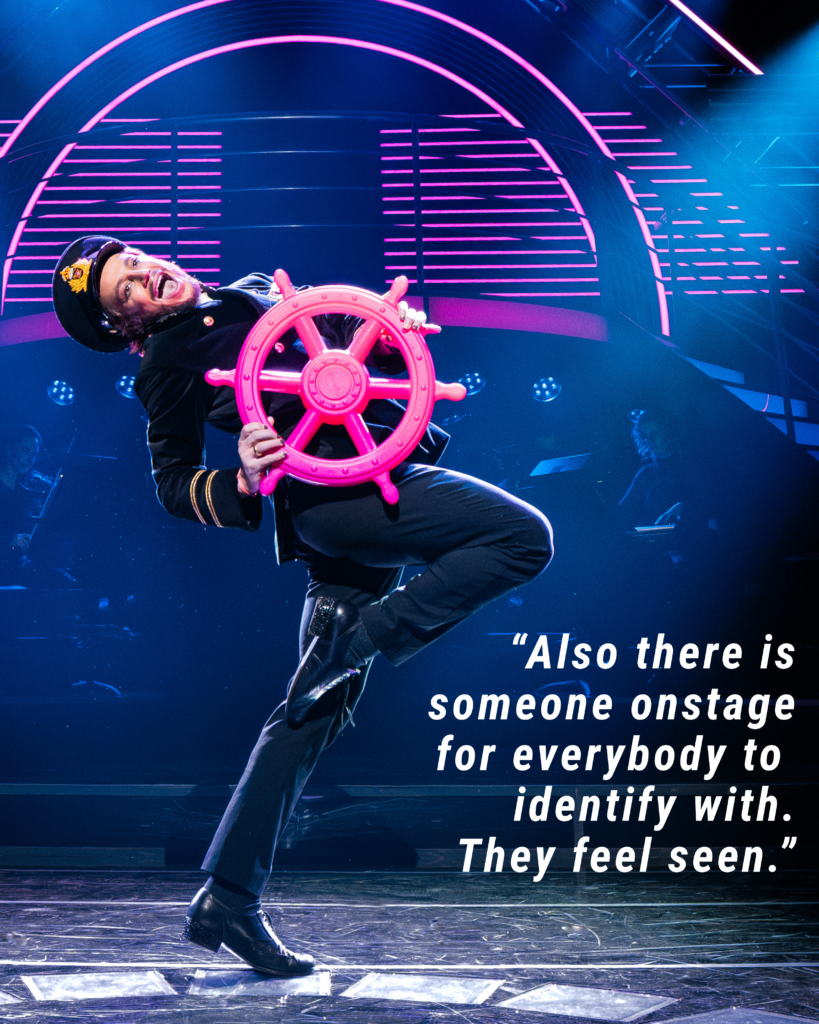
We recall, lift up, and subvert something beautifully nostalgic. That’s why. Also there is someone onstage for everybody to identify with. They feel seen.
Are there plans for Celine to see it? That’s the one headline — or photo op — I’ve been yearning for. Has she responded in other ways?
Her team/friends/family have been so kind and supportive in seeing the show, coming backstage, talking to the company and just being generally lovely. But Celine is very busy with her big comeback, so I doubt she will have the time to come anytime soon.
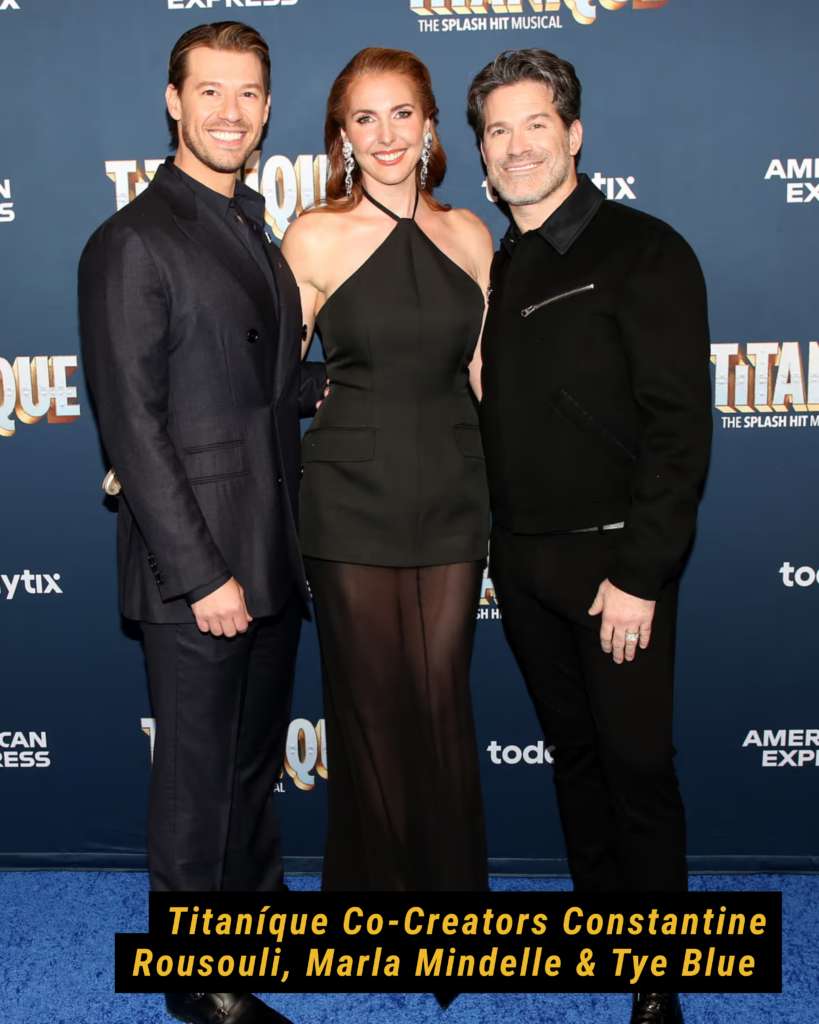
Your relationship with Connie and Marla seems especially special. In your opinion, what are their superhuman powers — and in relation to them, what would yours be?
Connie is the eternal optimist, which has always helped us. He’s a manifestor, an excellent networker, a joke machine, and he perfectly embodies our earnest-meets-quirky tone. He helped make our cheeky props in the beginning, many of which have stayed in the show this whole time. There are a couple of his punchlines that have been evergreen since day one. He also created the initial outline, placing songs essentially where they still exist today.
Marla is so good at kooky, krazy, bizarre text and ideas while always staying subtle and nuanced, which has been extremely helpful in crafting Céline and her material. She’s great with comedy structure — really building the jokes — and, of course, her improv abilities are a huge piece of the puzzle.
As for me, I was originally very focused on character function and archetypes: Ruth being a man; Ruth’s whole breakdown scene as an unhinged queer manifesto built anew on each actor; Molly becoming a mother to Rose; “Tell Him” as sex ed; Molly Brown surviving two shipwrecks because maybe she’s also a nosy Navy SEAL; personifying the Iceberg as Tina. Those are some of my structural contributions.
I’m also a stickler for sentence structure, pace, syntax, and syllable count — I will rewrite until the cows come home. And I’m always focused on the love story in the back of my mind: the family dynamic, Rose’s dilemma, Victor’s selfishness. Ultimately, it’s a very democratic way of working, with a checks-and-balances system. Every idea needs at least two out of three votes to stay in, you know? That’s the real superpower.
What have you learned most about yourself through your work on Titaníque?
To trust my instincts. To speak up. To give people space but always hold onto the reins. That despite what my inner saboteur says, I’m good at my job. I’ve learned so much about commercial theatre and building a show from the ground up. There are so many things that I do differently now as a creator and director because of what I learned over the past 10 years working on Titaníque. Also: don’t give away your power. Your approvals are your power.
And of course, the time-honored question: Pride can be celebration, protest, marketing, memory, and survival all at once. At this point in your life, and in 2026, what does Pride mean to you?
Well you’re asking this question to someone who has always worked in the queer community. My first big performing job was playing Margaret Mead in Hair. Then Steve in RENT. Then I ran gay nightclubs and hosted drag shows and did tons of community programs. Then I made this show.
So for me, pride is what I do. It is innate to my work. Pride is how I interact with strangers as a confident gay man. Pride is mentoring and encouraging young queer creatives.
Pride is making sure your team has queer people on it. Pride is supporting local drag queens. I could go on… but basically I do pride every day of the year, unapologetically.
To follow Tye Blue on Instagram, head here.
Throughout June and July 2026, RAG MAG NYC is spotlighting 30 queer New Yorkers shaping culture, community and nightlife right now.
These are the people creating the spaces, conversations, organizations, performances, and moments that make LGBTQ+ New York what it is. Some are household names. Others are the quiet forces making an impact every day.
Because Pride has always been more than a celebration. It’s the people who show up for one another.